
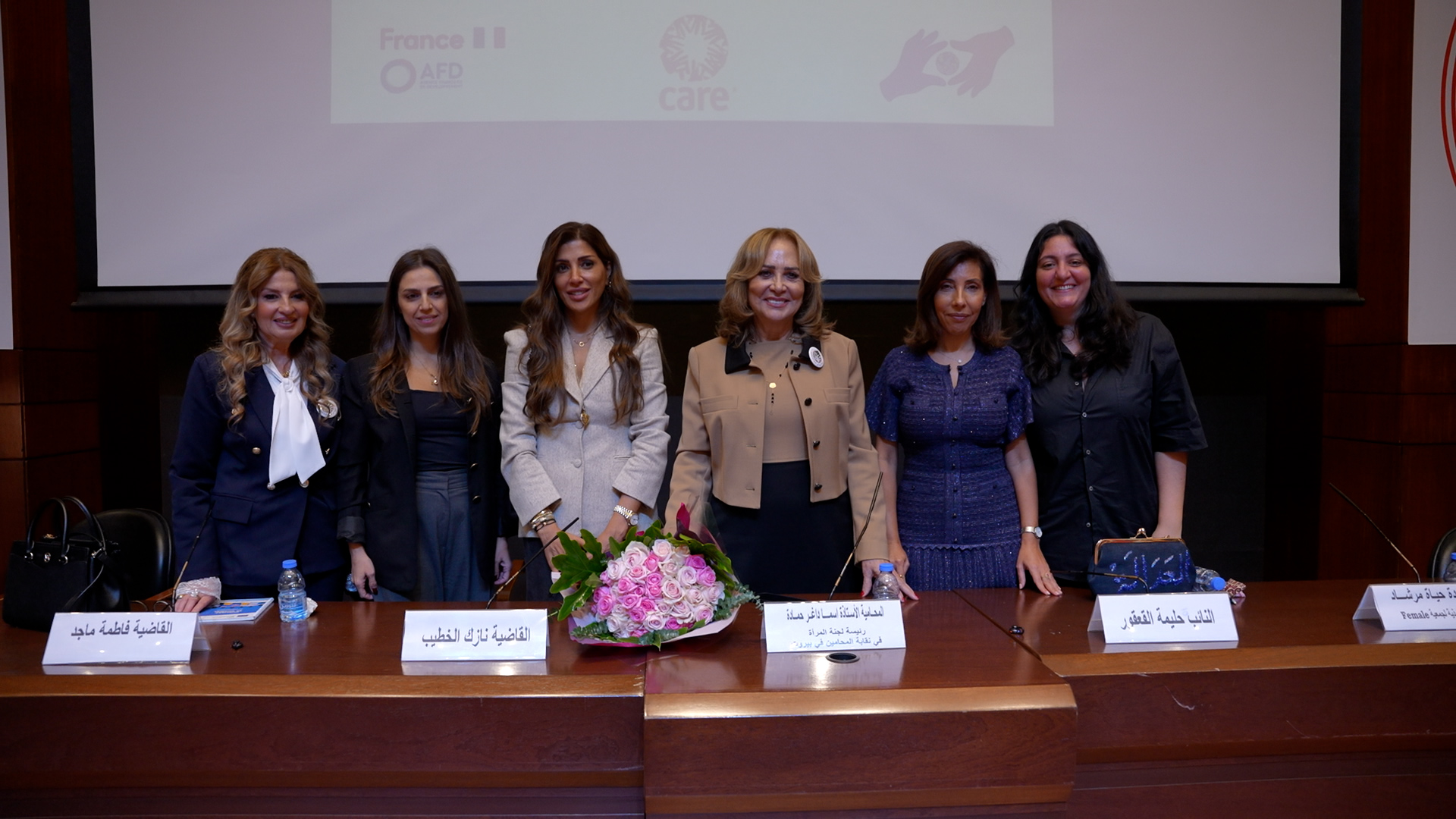
As part of its ongoing advocacy efforts to strengthen legal protections against digital violence, FEMALE, in collaboration with the Women’s Committee of the Beirut Bar Association, organized a legal discussion on 21 October 2026 at the Beirut Bar Association to present and examine Proposed Draft Law No. 278/2026 on the Protection of Women from Digital Violence.
Developed by FEMALE and submitted to the Lebanese Parliament in February 2026, the proposed draft law seeks to address gaps in existing legislation, strengthen protection mechanisms, and improve survivors’ access to justice.
The event opened with remarks by lawyer Asmaa Dagher Hamadeh, President of the Women’s Committee of the Beirut Bar Association, followed by FEMALE’s Executive Director, Hayat Mirshad.
The discussion brought together MP Halima Kaakour, Judge Nazek Al Khatib, and Judge Fatima Majed, alongside legal and judicial professionals and civil society representatives.
During her intervention, MP Halima Kaakour highlighted the digital blackmail and threats experienced by girls, particularly school students, and the fear many face when personal images or content are threatened with exposure to their families. She emphasized that protecting girls is not solely the responsibility of girls, their families, or schools, but also a responsibility of lawmakers and constitutional institutions.
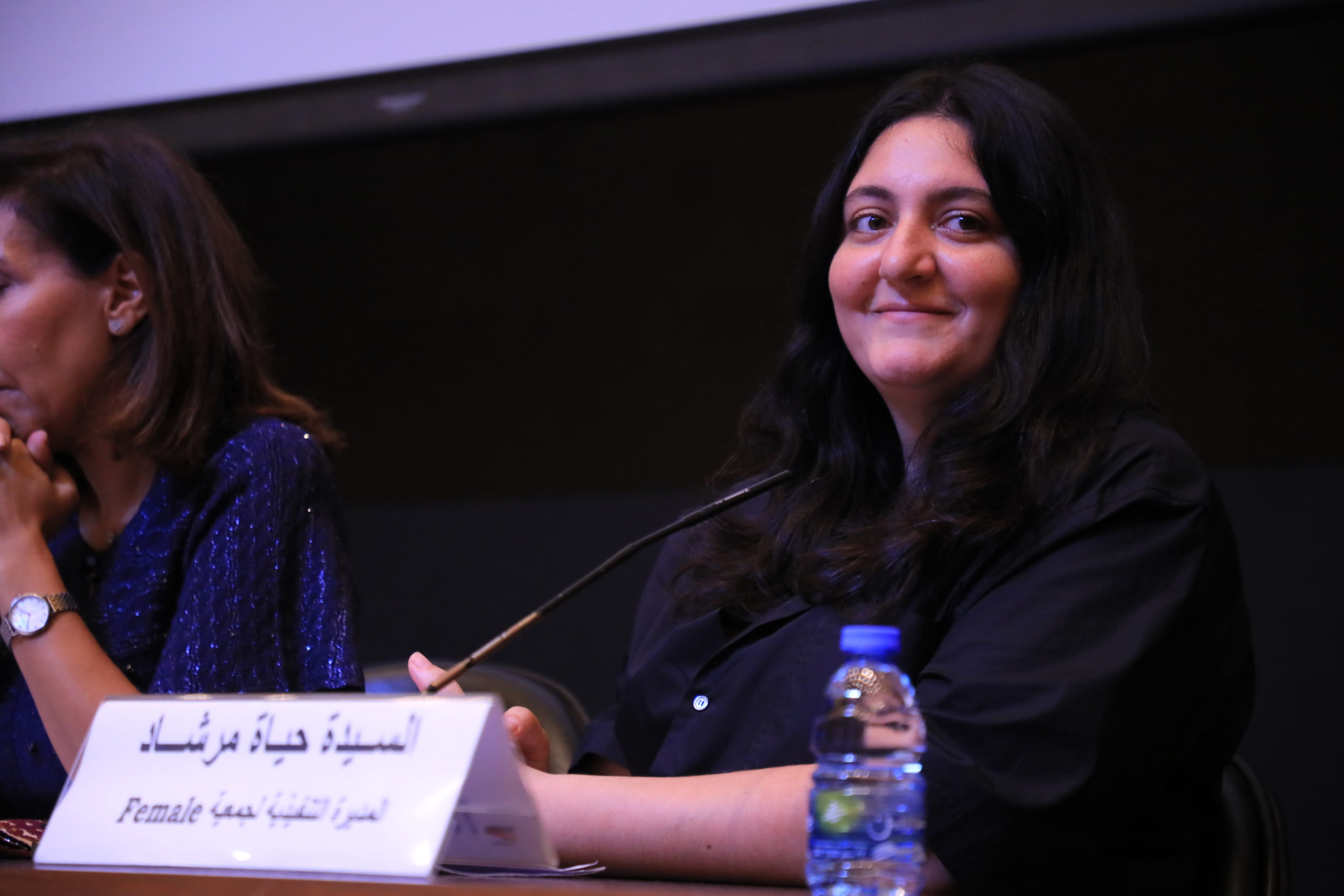
FEMALE’s Executive Director, Hayat Mirshad, highlighted how digital spaces, while offering women and girls opportunities to communicate, develop their lives, and participate in public life, have also become extensions of the violence they experience offline.
She addressed the rapid evolution of technology and artificial intelligence, which has introduced new forms of digital violence beyond harassment, blackmail, and threats, including AI-generated manipulated content, deepfakes, and voice cloning.
Hayat also raised a central question: Are legal and protection mechanisms evolving as quickly as the technologies being used to perpetrate digital violence?
The discussion explored the proposed draft law’s provisions, existing legal gaps, and the need for stronger protection and accountability mechanisms that respond to survivors’ needs.
From Awareness to Legal Protection
Since launching its Screens Do Not Protect campaign in 2020, FEMALE has worked to raise awareness of digital violence and its impact on women and girls. Building on these efforts, the organization launched Only the Law Can Lock the Block, emphasizing the need for legal recognition of digital violence and stronger protection mechanisms for survivors.
More recently, FEMALE launched Lynn’s Story, in partnership with UNFPA, a campaign following the experiences of a 15-year-old girl navigating digital spaces and the risks she may encounter online. Through Lynn’s story and insights from psychologist Wardé Bou Daher, the campaign explores the psychological and emotional consequences of digital violence and the importance of recognizing harmful online behaviors and seeking support.
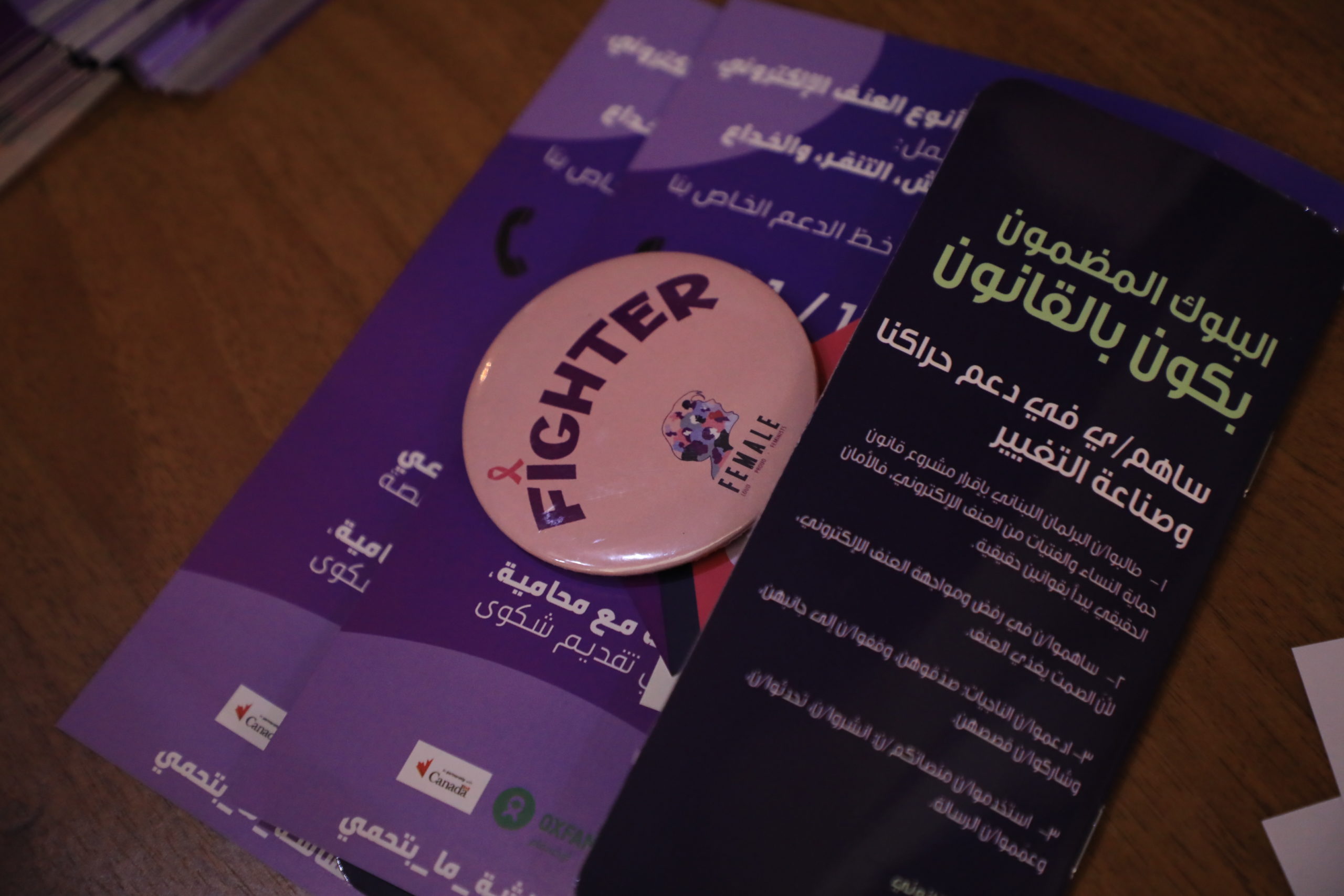
Alongside these initiatives, FEMALE continues to support women and girls experiencing digital violence through its dedicated helpline, 81111456, providing a channel to seek assistance and guidance.
FEMALE has also developed its Digital Safety Hub, bringing together research, awareness materials, digital safety guidance, information about the proposed draft law, and resources on reporting and seeking support.
Explore FEMALE’s Digital Safety Hub
Advancing Legal Protection for Women and Girls
The discussion at the Beirut Bar Association marked another step in FEMALE’s ongoing advocacy efforts to strengthen legal protection against digital violence.
As technology continues to evolve, ensuring that legislation responds to emerging forms of abuse remains essential to protecting women and girls and holding perpetrators accountable.
FEMALE remains committed to engaging with lawmakers, legal and judicial professionals, and civil society organizations to advance Proposed Draft Law No. 278/2026 and promote effective, survivor-centered legal protection.
The event was held under the Feminists in Action (FIA) project, in partnership with CARE Lebanon and with the support of the French Development Agency (AFD).
View this post on Instagram